
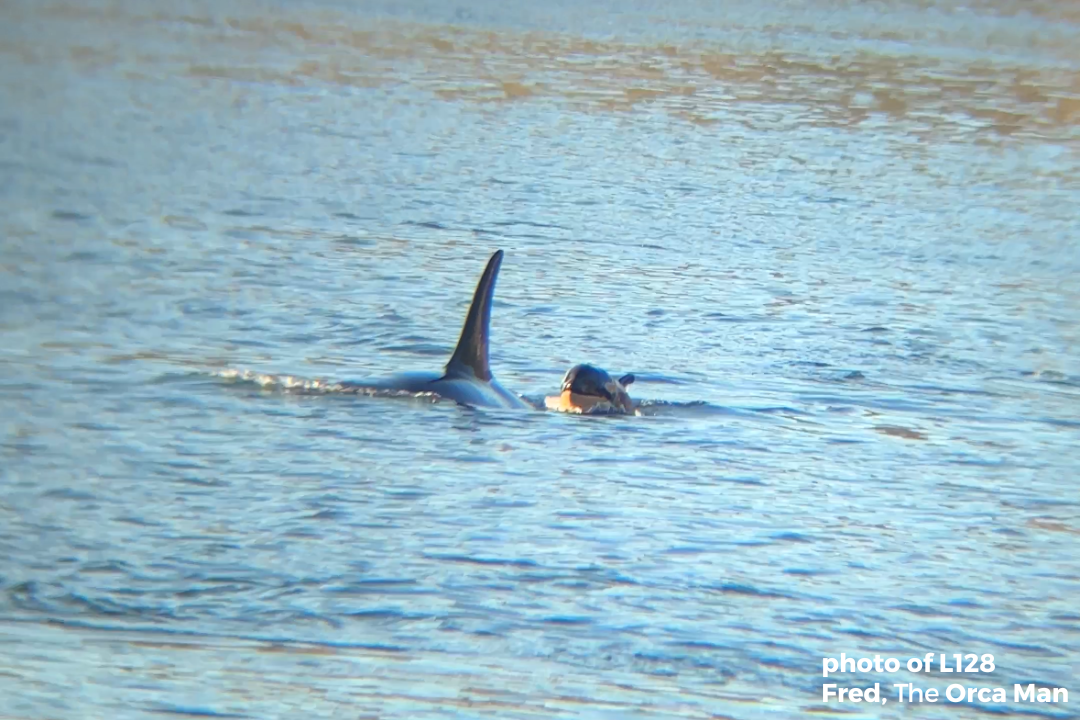
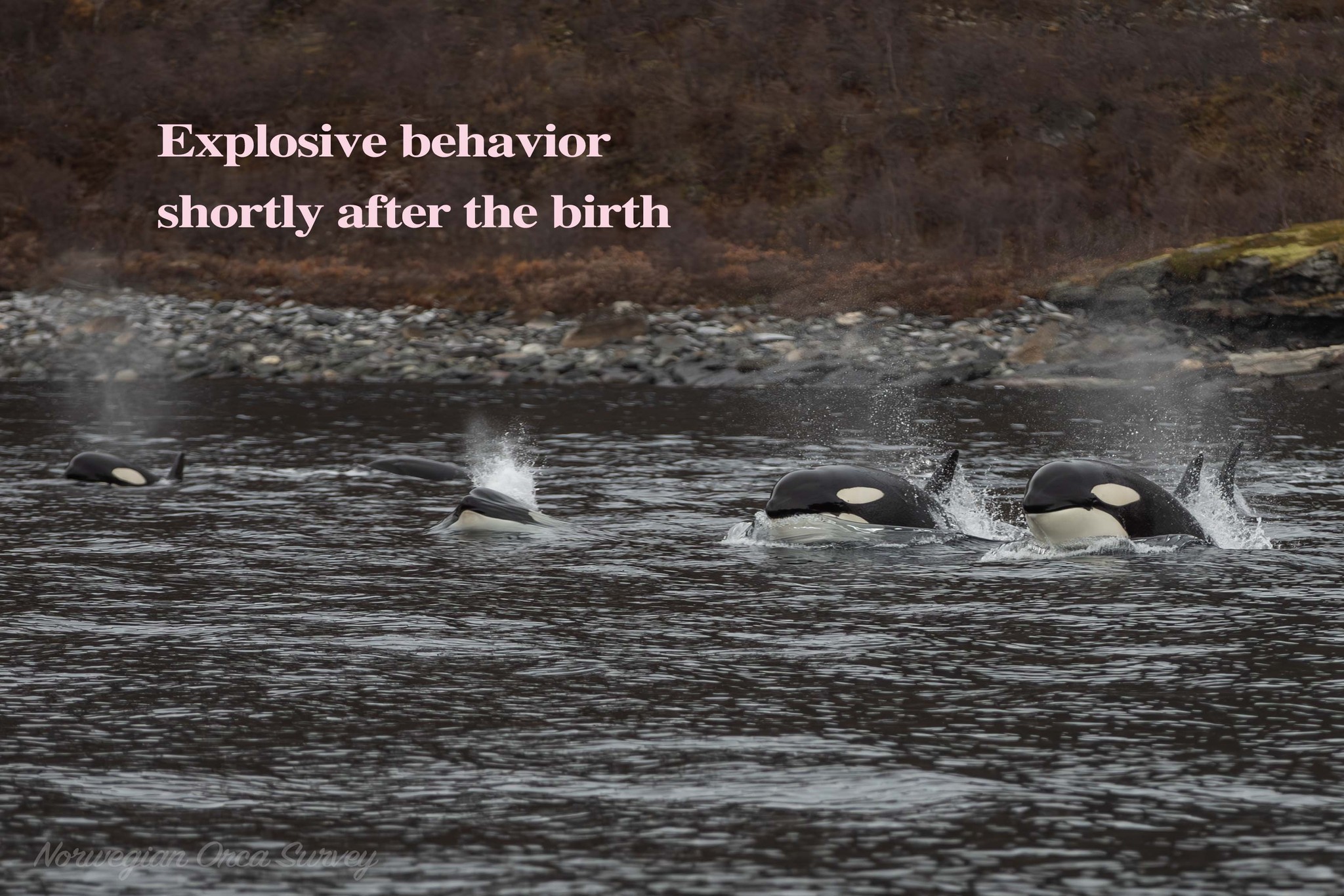
During a “routine survey” in the late morning off the coast of Skjervøy, researchers with Norwegian Orca Survey (NOS), including Eve Jourdain and Jörg Rychen, reported finding a group of whales near the shoreline of island Laukøya joined by six other whale-watching boats. In a post on Facebook, they noted the whales were unusually active; this was corroborated by Krisztina Balotay of The Orca Channel who also posted about the encounter on Facebook, first believing the whales to be feeding.
After some observation Balotay photographed blood in the water near her boat and saw “a little head pop above water”, leading to the strong indication that a calf had been born. Her account also states the group of animals “formed a protective circle around the calf.” The Norwegian Orca Survey, while watching from afar, were able to monitor the baby’s health using a drone.
Eve Jourdain is the founder and principal scientist at Norwegian Orca Survey, creating the organization initially as a data collection platform in 2014 for her PhD studies at the University of Oslo. NOS has now become the leading research organization for Norwegian killer whales, utilizing many different kinds of technology for their studies. Jörg Rychen is a wild animal neurophysiologist, freediver, and orca researcher from Switzerland, currently working as a scientist at ETH Zürich. Krisztina Balotay is a whale watching tour guide, wildlife photographer, and frequent NOS collaborator who created The Orca Channel, now using it to share updates and images of whales in the Arctic.
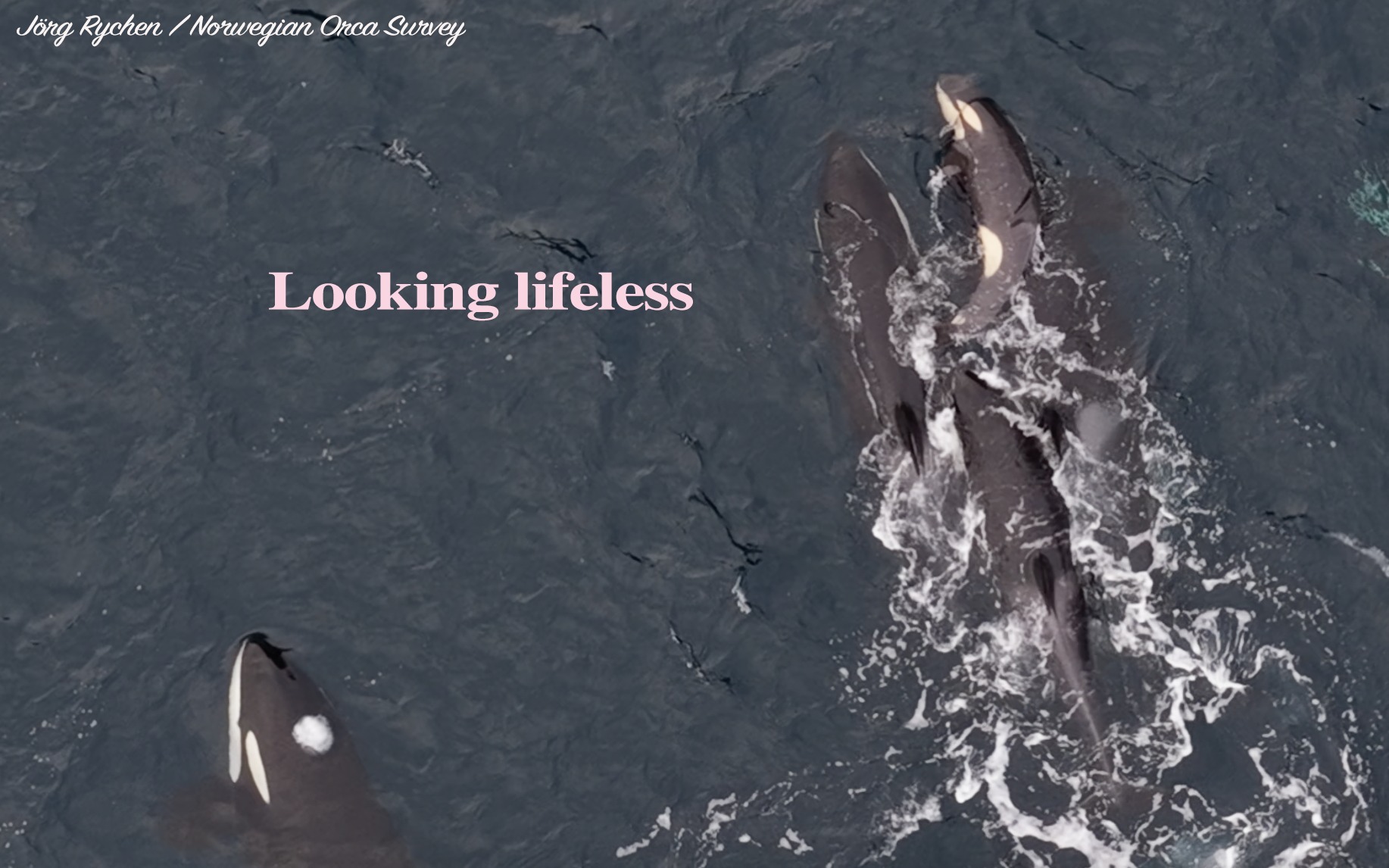
After the realization that a calf had been born, all boats were moved out of the area so as to give the animals their space, and Norwegian Orca Survey was able to continue documenting their progress from a distance until dark. They stated that “[the calf] was struggling during its first 15 minutes…but then began swimming on its own.” Pictures taken by Jourdain and Rychen show the calf first being carried on the back of other whales, but eventually swimming independently alongside its pod members (figures 1 & 2). NOS identified the mother as NKW-591, a female with multiple previous offspring who was first identified in 2013.
This is the first time a wild orca birth along with the first hours of the calf’s life have been observed and documented. Norwegian Orca Survey stated that they are planning to publish their findings as a scientific article in the near future.
To stay updated on more findings in killer whale research, join The World of Orcas Zine, a monthly magazine featuring anything and everything Orca.